

No products in the cart.
Can Crystals Go in Water? A Complete Guide to Water-Safe Crystals
Introduction
Have you ever picked up a crystal, noticed a little dust on its surface, and wondered:
Can I just wash this crystal with water?
It sounds like a simple question, but the answer isn’t always yes.
Some crystals and gemstones can be gently cleaned with water, while others may be damaged by prolonged contact with moisture. Certain minerals can dissolve, lose their surface finish, or become more vulnerable over time.
And there’s another common misconception:
A crystal’s Mohs hardness alone does not tell you whether it is safe to put in water.
Hardness primarily describes resistance to scratching. When deciding how to clean a crystal, you should also consider its mineral composition, structure, treatments, fractures, coatings, and whether it is part of a finished piece of jewelry.
In this guide, we’ll explain can crystals go in water, which commonly used crystals are more water-tolerant, which ones should stay dry, and safer ways to care for crystals when you’re unsure.
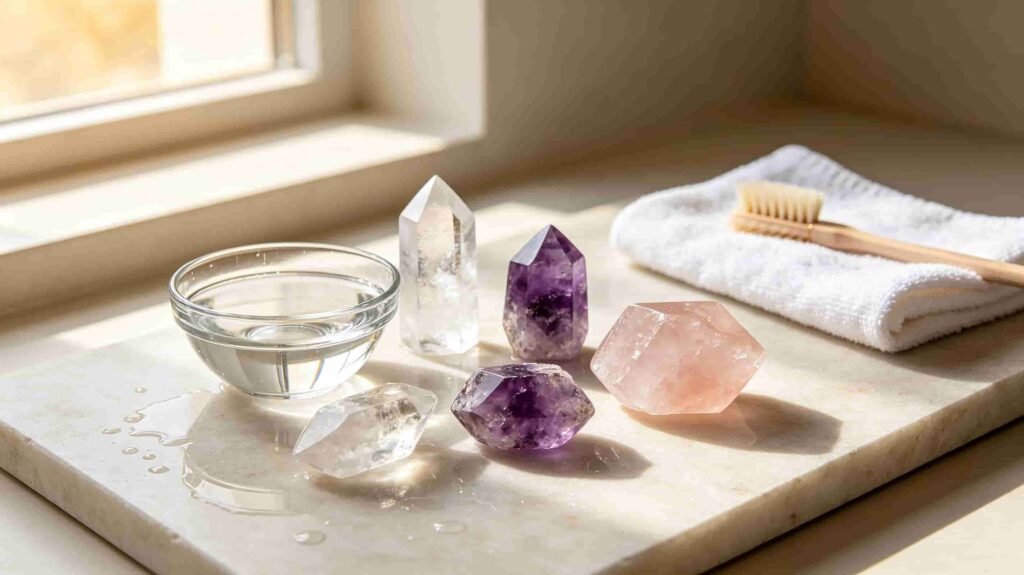
1. Can Crystals Go in Water?
The short answer is:
Some can. Some shouldn’t.
There is no single rule that applies to every crystal.
Quartz varieties such as amethyst and rose quartz, for example, can generally be cleaned using warm, soapy water when they are suitable untreated stones. GIA specifically lists warm, soapy water as a safe cleaning method for both amethyst and rose quartz.
But this doesn’t mean every crystal should be soaked in a bowl of water.
Some minerals are water-soluble. Others may have delicate surfaces, natural fractures, coatings, dyes, fillers, or components that require a more careful approach.
The safest habit is simple:
Identify the material first. Choose the cleaning method second.
2. Why the Mohs Hardness Scale Isn’t Enough
You may have seen a popular rule online:
“Crystals above 6 on the Mohs scale can go in water.”
It’s convenient, but it’s too simplistic.
The Mohs scale measures a mineral’s relative resistance to scratching. It is useful when discussing durability, but it does not directly measure water solubility, chemical stability, toughness, porosity, treatments, or fracture risk.
A harder gemstone can still require special care.
Likewise, two crystals with similar hardness may react differently to heat, chemicals, ultrasonic cleaning, or prolonged moisture.
For example, GIA notes that amethyst has a Mohs hardness of 7, but also warns that abrupt temperature changes can cause fractures and prolonged intense light can affect its color.
So instead of asking only:
“How hard is this crystal?”
Also ask:
“What mineral is it, has it been treated, and what cleaning method is recommended for it?”
3. Crystals Commonly More Tolerant of Gentle Water Cleaning
For ordinary physical cleaning, several familiar quartz varieties are relatively straightforward to care for.
However, “water-tolerant” does not mean “leave it soaking for hours.”
Usually, brief gentle cleaning is all you need.
Amethyst
Amethyst is a purple variety of quartz with a Mohs hardness of about 7.
For suitable amethyst, warm, soapy water is considered a safe cleaning method. After cleaning, rinse gently and dry the crystal thoroughly with a soft cloth.
Avoid exposing amethyst to unnecessary heat, sudden temperature changes, or prolonged intense light.
Rose Quartz
Rose quartz is another quartz variety with a Mohs hardness of about 7.
GIA recommends warm, soapy water as a safe cleaning method for rose quartz and advises against ultrasonic and steam cleaning.
For ordinary home care, gentle hand cleaning is usually more than enough.
Clear Quartz
Clear quartz belongs to the same quartz mineral family.
For a simple untreated quartz specimen, gentle cleaning with water can often be appropriate. However, natural clusters may contain fractures, mineral inclusions, matrix material, or delicate crystal points.
For these pieces, avoid unnecessary soaking and aggressive scrubbing.
Looking for natural crystals for your home or personal collection? Explore our carefully selected natural crystal collection, including Amethyst, Rose Quartz, Clear Quartz and more.
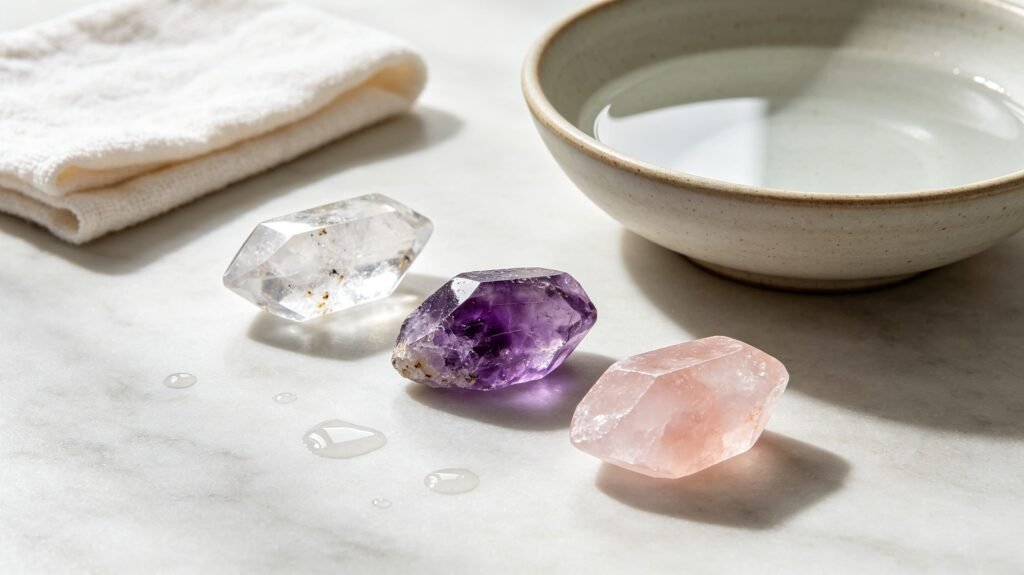
4. Crystals You Should Keep Away From Water
This is where being able to identify your mineral becomes especially important.
Some minerals should not be treated like quartz.
Selenite / Gypsum
Selenite is a crystalline variety of gypsum.
Unlike quartz, gypsum is much softer and has different physical properties. For decorative selenite pieces, keeping them dry and using a soft brush or cloth for routine dust removal is the more conservative approach.
Avoid unnecessarily soaking selenite in water.
Halite
Halite is natural sodium chloride — essentially rock salt.
This is one of the clearest examples of why hardness alone is not enough.
Halite is water-soluble, and mineral references specifically note that it should be protected from humid environments.
Putting a halite specimen in water can physically dissolve the mineral.
Calcite
Calcite is softer and more chemically sensitive than quartz.
Instead of soaking calcite specimens, a cautious approach is to remove dust with a soft dry brush or cloth unless you know the exact mineral specimen and appropriate cleaning method.
Avoid acids and harsh household cleaners.
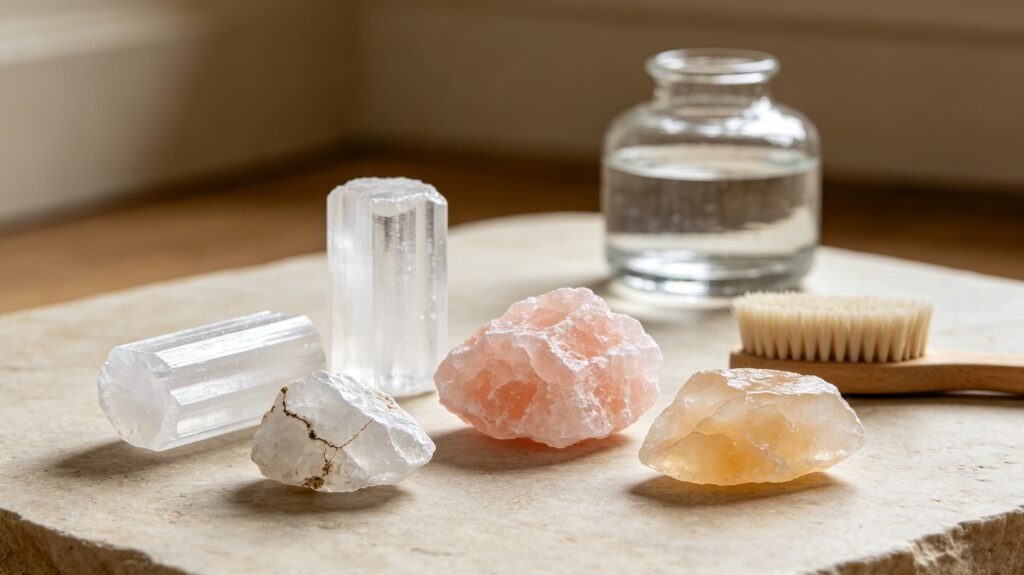
5. What About Crystal Jewelry?
A very important distinction is:
A water-safe gemstone does not automatically mean the entire piece of jewelry is water-safe.
A bracelet or necklace may contain:
- Elastic cord
- Metal wire
- Plated metal
- Adhesive
- Clasps
- Dyed components
- Other gemstones
- Decorative coatings
Repeated exposure to water may affect these materials even when the main crystal itself tolerates gentle water cleaning.
For example, knowing that an untreated rose quartz stone can be cleaned with warm soapy water does not automatically mean you should shower every day while wearing a rose quartz bracelet.
When cleaning crystal jewelry, always consider the entire construction, not only the gemstone.
Not sure how to care for your crystal jewelry?
If you’re unsure about the materials or proper care method for your crystal bracelet, contact DaoMind and we’ll help you find a suitable way to care for it.
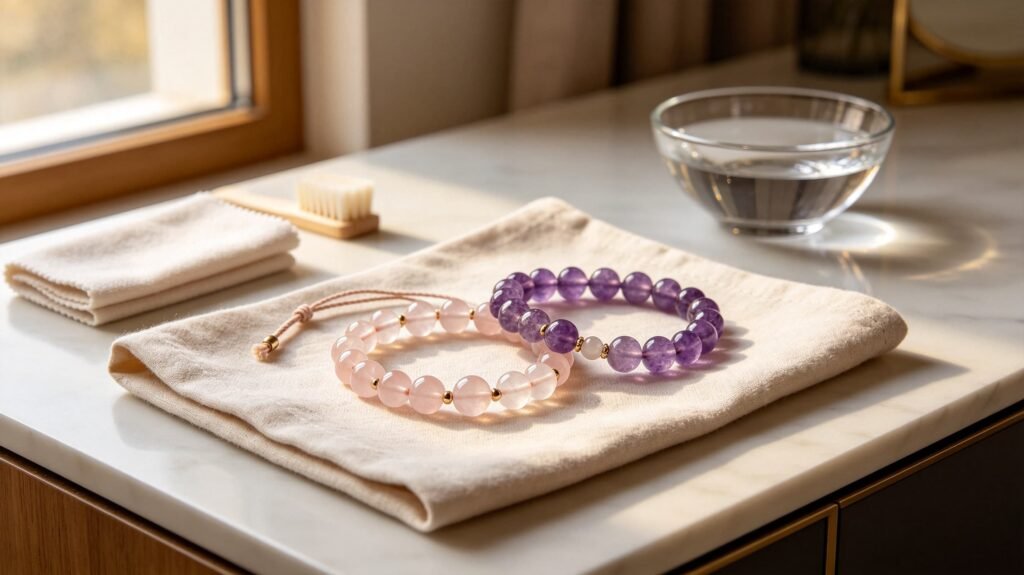
6. Can You Soak Crystals in Water Overnight?
In most cases, there is no practical reason to soak a crystal overnight simply to clean it.
If a crystal can safely be cleaned with water, brief gentle cleaning is usually sufficient.
Long soaking introduces unnecessary variables:
- Water entering small fractures
- Changes to delicate matrix material
- Damage to coatings or treatments
- Corrosion of jewelry components
- Weakening of adhesives or elastic materials
If you don’t know exactly what the specimen contains, prolonged soaking is best avoided.
7. How to Clean Crystals Without Water
If you’re unsure whether a crystal is water-safe, you don’t always need water.
Several simple methods can be used for routine physical care.
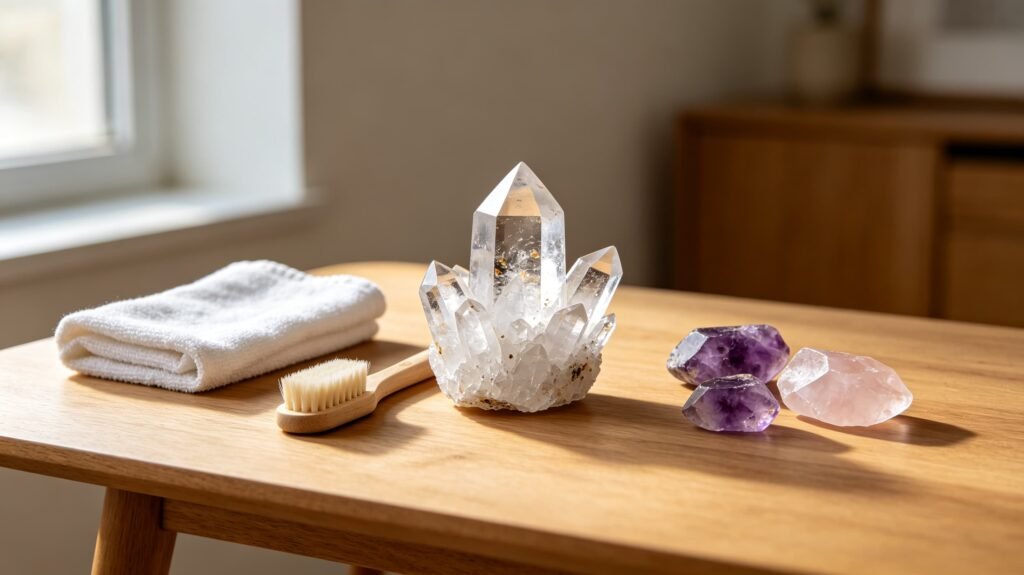
Use a Soft Brush
A clean, very soft brush can remove loose dust from crystal clusters, grooves, and uneven surfaces.
Use a Soft Dry Cloth
For polished stones, gently wiping the surface with a clean lint-free cloth is often enough for everyday dust.
Use a Slightly Damp Cloth When Appropriate
For some materials, a slightly damp cloth can provide more control than fully immersing the crystal.
Always check the specific care requirements first.
Ask Before Cleaning Valuable or Unidentified Specimens
If the crystal is valuable, treated, antique, mounted in jewelry, or simply difficult to identify, professional advice is safer than experimenting.
8. Physical Cleaning vs. Crystal Cleansing
These two ideas are often mixed together online, but they are not the same thing.
Physical cleaning means removing dust, oil, fingerprints, dirt, or other physical residue from a crystal.
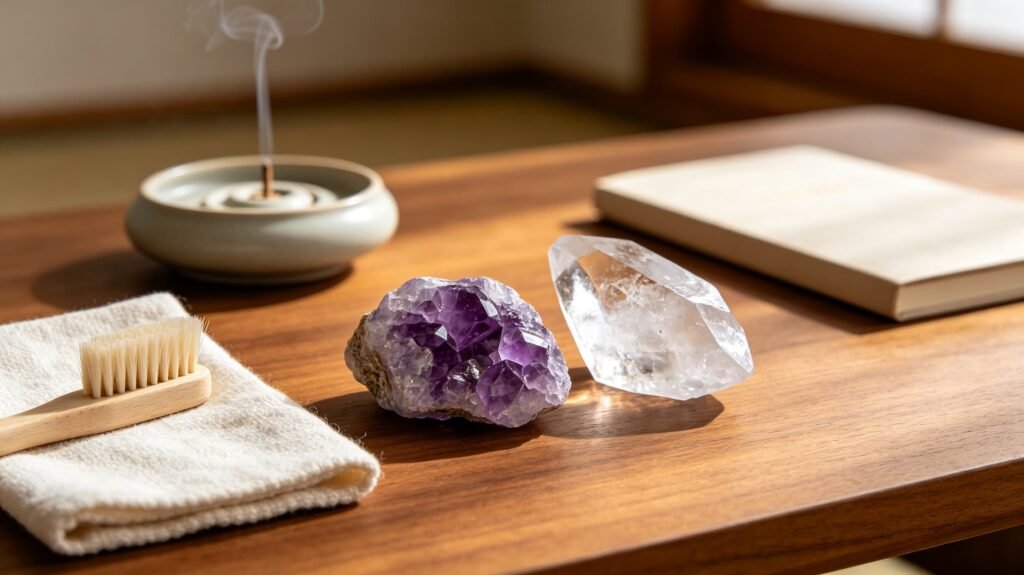
Crystal cleansing refers to symbolic or spiritual practices used in some crystal traditions.
For example, someone may use moonlight, sound, smoke, or another personal ritual as part of their crystal practice.
These methods are based on tradition and personal belief rather than mineral cleaning science.
If you’re interested in the symbolic side of crystal care, read our complete How to Cleanse Your Crystals guide.
9. Quick Water-Safety Guide
| Crystal | Gentle Water Cleaning | Important Note |
|---|---|---|
| Amethyst | Generally yes | Use warm soapy water; avoid excessive heat |
| Rose Quartz | Generally yes | Warm soapy water is suitable |
| Clear Quartz | Often suitable | Be cautious with fractures, matrix and treatments |
| Selenite / Gypsum | Best avoided | Keep dry for routine care |
| Halite | No | Water-soluble |
| Calcite | Avoid unnecessary soaking | Use gentler care |
10. Water-Safe Crystal FAQ
Can Amethyst Go in Water?
For suitable untreated amethyst, warm soapy water is considered a safe cleaning method. Avoid unnecessary prolonged soaking and extreme temperature changes.
Can Rose Quartz Go in Water?
Rose quartz can generally be cleaned with warm soapy water. GIA recommends avoiding ultrasonic and steam cleaners for rose quartz.
Can Clear Quartz Go in Water?
Many simple untreated clear quartz pieces can tolerate gentle water cleaning, but natural fractures, matrix material, treatments, or jewelry components may change the appropriate care method.
Can Selenite Go in Water?
It is better to keep decorative selenite dry and use gentle dry cleaning methods for routine care.
Can Crystal Bracelets Go in Water?
It depends on the entire bracelet, not only the gemstone.
Elastic cord, metal components, coatings, adhesives, and additional materials may all react differently to repeated water exposure.
Conclusion: When in Doubt, Keep It Simple
So, can crystals go in water?
Sometimes.
But the safest approach is not to memorize one universal list.
Instead:
Identify the mineral.
Understand the piece.
Check how it has been treated.
Choose the gentlest effective cleaning method.
Amethyst and rose quartz are examples of familiar crystals that can generally be cleaned gently with warm soapy water, while minerals such as halite clearly require a very different approach.
And remember:
More cleaning isn’t always better.
Sometimes a soft brush, a clean cloth, and careful handling are all your crystal needs.
Continue Your Crystal Journey
Caring for your crystals properly can help preserve their natural beauty for years to come.
If you’re looking for a new crystal for your home, daily rituals, or personal collection, explore the DaoMind crystal collection and discover Amethyst, Rose Quartz, Clear Quartz and more.
Still unsure which crystal is right for you or how to care for a crystal you already own? Contact DaoMind and we’ll be happy to help.
Share Post

Add comment